
Coccidiosis in broilers: how to test anticoccidials, vaccines and alternatives in a challenge model
Coccidiosis is still one of the costliest diseases in broiler production. How a coccidiosis challenge model is designed to prove that an anticoccidial, a vaccine or a natural alternative works.
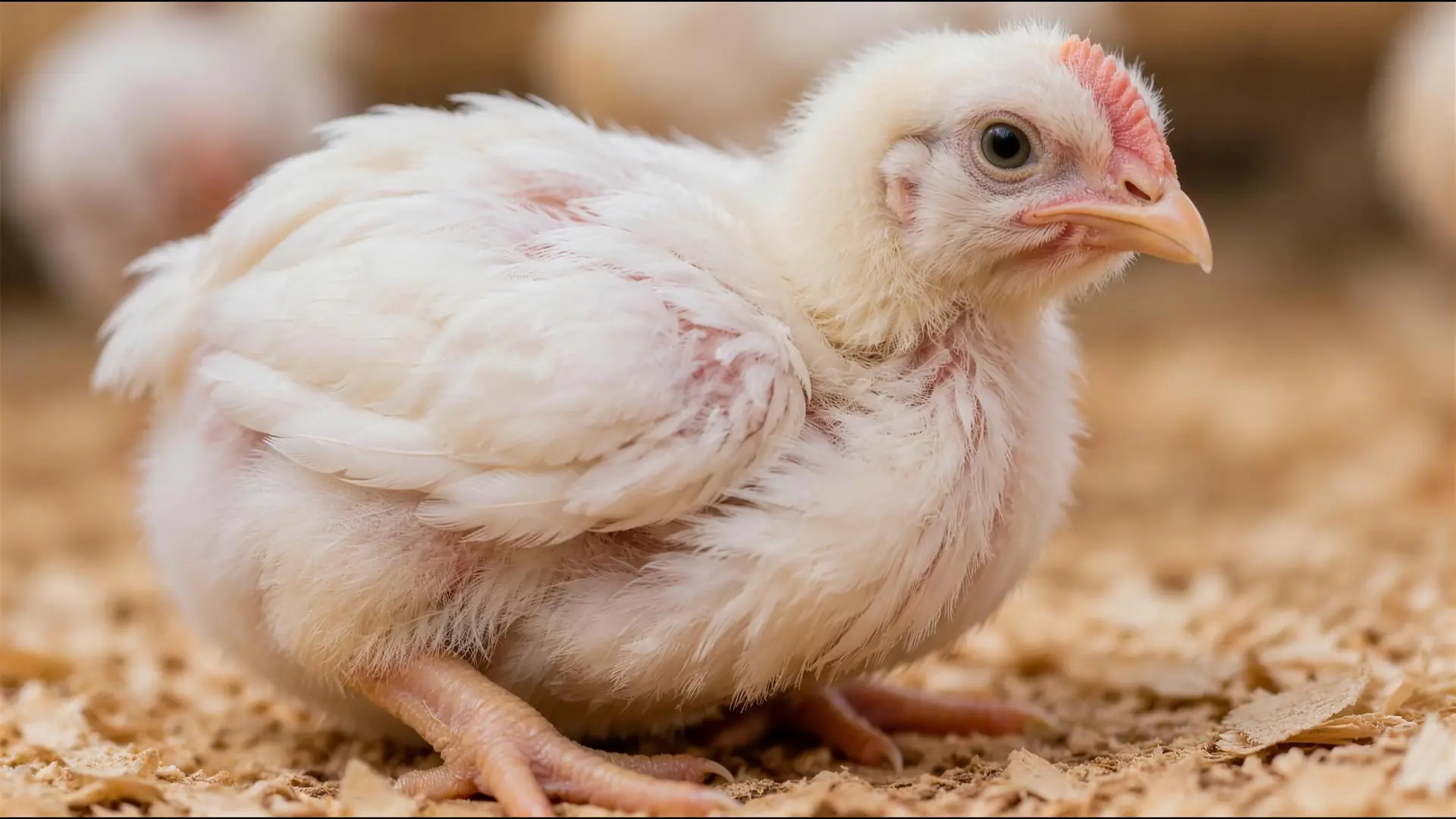
Coccidiosis, caused by Eimeria parasites, is one of the most expensive diseases in chicken production: a 2020 study estimated its global cost at over €11 billion. As anticoccidial programmes change and the market asks for vaccines and natural alternatives, every new product has to answer the same question: does it work when the birds are actually infected?
On a commercial farm, coccidial pressure changes from one flock to the next, so a field result rarely proves much on its own. A challenge model does.
- €11 bn+estimated global cost of coccidiosis in chickens (Blake et al., 2020)
- 3 speciescause most coccidiosis in broilers: E. acervulina, E. maxima and E. tenella
- 3 + 3floor pen studies and anticoccidial sensitivity tests EFSA typically assesses for a coccidiostat
- BSL-2rooms for challenge studies at our poultry research centre in Murcia, Spain
What a coccidiosis challenge model does
Birds are infected with a known dose of Eimeria oocysts at a set age, under controlled conditions. Each treatment is compared with an uninfected control, an infected untreated control and, when it makes sense, an infected group on a reference anticoccidial. That design separates the effect of the product from the effect of the infection, and shows how close the product gets to the reference.
What do you need to prove?
Choose your goal to see the type of study that fits it.
Anticoccidial sensitivity tests and floor pen studies
For coccidiostats, EFSA's opinions typically rely on three anticoccidial sensitivity tests (ASTs) with recent field isolates and three floor pen studies with artificial infection, each showing a significant effect at the proposed dose. The minimum effective dose is set from those results.
Floor pen or battery challenge with dose response
Phytogenics, organic acids, probiotics or other additives are tested against an infected untreated control and, ideally, a reference anticoccidial. Testing more than one dose shows where the effect starts, and gut health endpoints help explain how the product works.
Vaccination followed by challenge
Vaccinated and non-vaccinated birds are challenged later with a known dose, and protection is measured as lower lesion scores and oocyst output and better performance. Compatibility with the feed programme, including any in-feed additive, is part of the design.
Combined Eimeria and Clostridium perfringens model
Coccidiosis damages the gut lining and is the main predisposing factor for necrotic enteritis. A combined challenge reproduces that sequence to test products that claim to protect the gut in antibiotic-free production.
What we measure
- Performance: body weight, daily gain, feed intake, feed conversion ratio (FCR) and mortality.
- Lesion scores: intestinal lesions scored by segment on the Johnson and Reid 0–4 scale, by Eimeria species.
- Oocyst counts: oocysts per gram (OPG) in faeces or litter, to measure parasite output.
- Gut health, when needed: villus height and crypt depth, and intestinal microbiota.
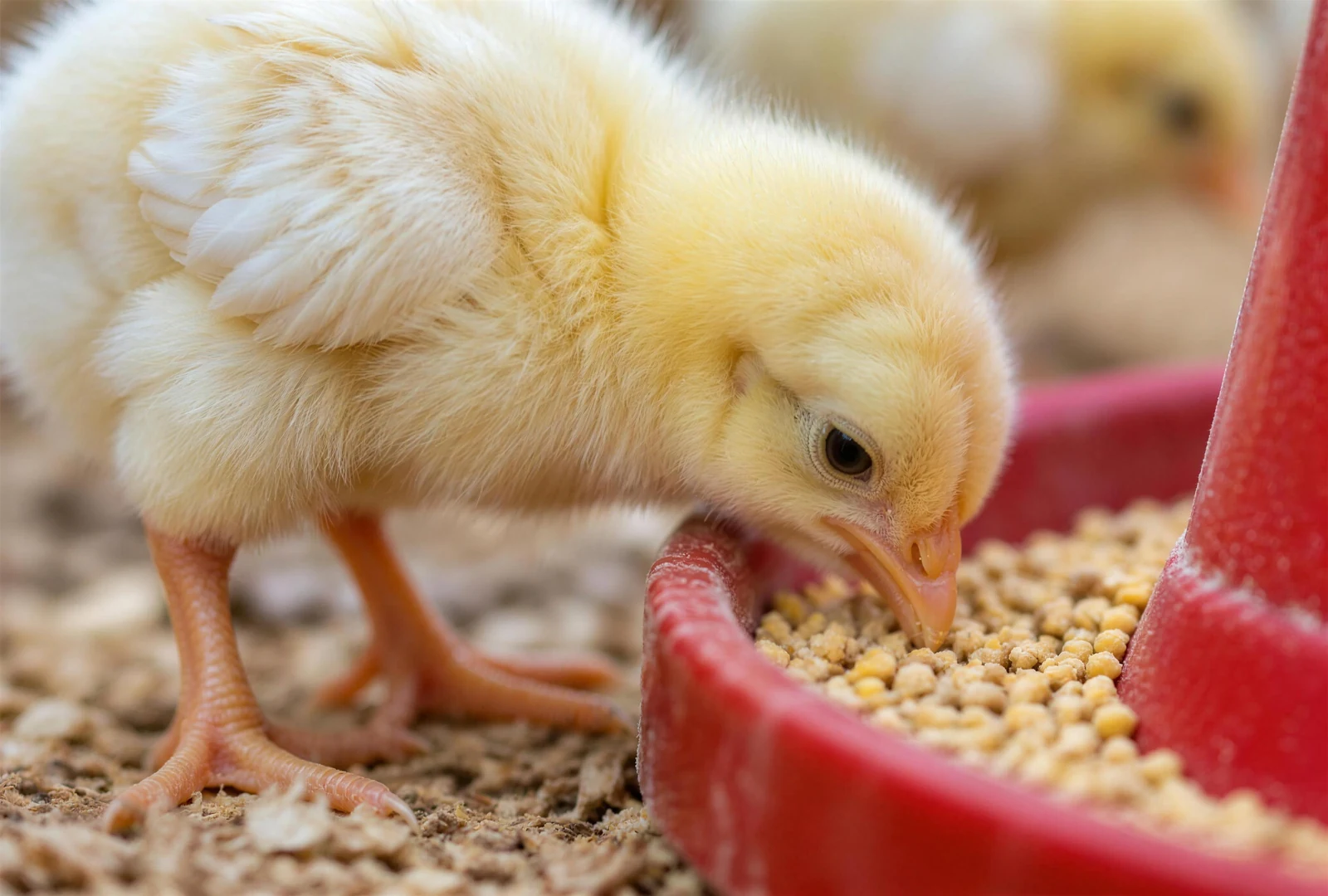
How the study is designed
The pen or the cage is the experimental unit, so the number of replicates is calculated per pen before the study starts, from the difference you need to detect. Treatments are randomised by blocks, the challenge dose and timing are fixed in the protocol, and the statistical analysis plan is agreed in advance. Every study runs under Good Clinical Practice (GCP), and our independent animal ethics committee reviews and approves the protocol, as EFSA asks for in feed additive dossiers.
Frequently asked questions
What causes coccidiosis in broilers?
Protozoan parasites of the genus Eimeria. Birds pick up oocysts from the litter, the parasites multiply in the intestinal lining and damage it, which reduces nutrient absorption and opens the door to other diseases.
What are the symptoms of coccidiosis in broilers?
Poor growth and feed conversion, diarrhoea (bloody with E. tenella), wet litter and higher mortality. Subclinical coccidiosis shows mainly as lower performance, which is why it is easy to underestimate.
How is coccidiosis prevented in broilers?
With anticoccidials in feed, often in shuttle or rotation programmes, with live vaccines, and with good litter and house management. Feed additives are increasingly used to support these programmes.
Can vaccinated chickens get coccidiosis?
Live vaccines work through a controlled infection, so mild lesions after vaccination are expected. Protection depends on even uptake of the vaccine and on the challenge the birds meet later, which is what a vaccination-challenge study measures.
What is a coccidiosis lesion score?
A visual score of the intestinal lesions caused by each Eimeria species, usually on the Johnson and Reid scale from 0 (no lesions) to 4 (severe). It is one of the main endpoints of a challenge study.
How many studies does EFSA need for a coccidiostat?
In recent opinions, EFSA has typically based its conclusions on three anticoccidial sensitivity tests and three floor pen studies with significant effects at the proposed dose. The exact package depends on the product and the claim, so it is worth agreeing on it before the first study.
